
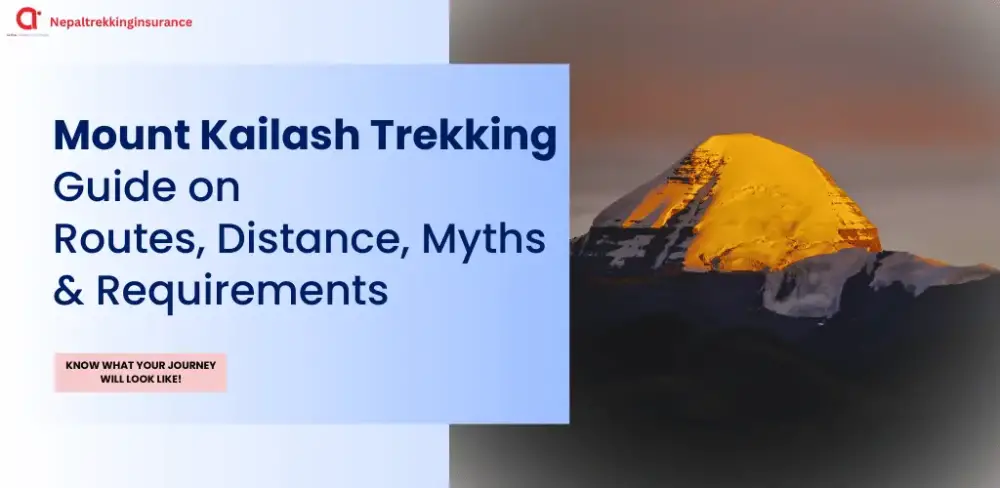
Mount Kailash trekking is not just an adventure - it’s a profound journey blending spirituality, culture, and natural beauty. At 6,638 meters, Mount Kailash rises majestically in western Tibet, near the source of Asia’s great rivers like the Indus and Brahmaputra. For centuries, it has been revered as a cosmic axis, the spiritual centre of the universe.
Unlike Everest or Annapurna treks, which focus on reaching a peak, Mount Kailash trekking is about walking around the sacred mountain in a ritual known as the Kora. Pilgrims believe that completing one circumambulation purifies a lifetime of sins, while 108 rounds can bring ultimate liberation.
Why is Mount Kailash Trekking so Special?
The uniqueness of the Kailash Parvat trek lies in its layered significance:
-
Spiritual Meaning:
-
For Hindus, it is Lord Shiva’s divine residence.
-
Buddhists believe it represents Mount Meru, the centre of the universe.
-
Jains revere it as the site of their first Tirthankara’s liberation.
-
Bon followers see it as a sacred nine-story mountain, the seat of their spiritual power.
-
Cultural Experience: Walking alongside pilgrims who chant prayers, spin prayer wheels, or prostrate themselves along the trail adds a humbling and unique dimension.
-
Natural Beauty: From turquoise Lake Mansarovar to the glacier-fed valleys and the towering Dolma La Pass, the trek combines spirituality with breathtaking Himalayan scenery.
Ensure your safety with travel insurance covering helicopter evacuation up to 5700m Get covered now!
Mount Kailash Trekking Distance & Duration
The Mount Kailash trekking distance is around 52-53 km (32-33 miles), typically completed in 3 days. Here’s a detailed breakdown with elevation:
-
Day 1: Darchen (4,575m) to Dirapuk (about 20 km / 6-7 hrs, elevation gain from 4,575m to 5,210m)
The trek begins from Darchen on relatively flat terrain, following the river valley. Stunning views of Kailash’s north face emerge as you approach Dirapuk Monastery, located at about 5,210 meters. -
Day 2: Dirapuk to Zuthulpuk via Dolma La Pass (about 22 km / 9-11 hrs, highest point 5,630m at Dolma La Pass)
This is the toughest but most rewarding section. The trek ascends steeply to Dolma La Pass, the highest point on the route at approximately 5,630 meters, where prayer flags flutter in the wind. The descent passes by the sacred Gauri Kund (Lake of Compassion). -
Day 3: Zuthulpuk (4,760m) to Darchen (about 12-14 km / 4-7 hrs)
A gradual descent across open plains and river valleys leads back to Darchen, completing the circuit.
Including travel time to/from Tibet, acclimatisation days, and visits to Lake Mansarovar (elevation about 4,600m), the full journey often takes about 10-15 days.
By comparison, the Adi Kailash trekking distance in Uttarakhand, India, is about 18 km - shorter but spiritually significant, often called “Chhota Kailash.”
Mount Kailash Trekking Routes
Several Mount Kailash trekking routes exist, depending on where you begin your journey:
-
Classic Kailash Mansarovar Kora
-
Starts at Darchen, the small Tibetan town at the base of Kailash.
-
Pilgrims and trekkers alike walk the 52 km circuit around the mountain.
-
Includes monasteries, holy sites, and sacred lakes.
-
Lake Mansarovar Route
-
Many combine the trek with rituals at Lake Mansarovar (4,600m).
-
Pilgrims bathe in the icy waters or collect bottles of holy water to carry home.
-
Adi Kailash Route (India)
-
Located in Uttarakhand, this trek is often chosen by Indian pilgrims who cannot cross into Tibet.
-
Features Om Parvat, where snow forms a natural “Om” symbol.
-
Monte Kailash Trekking (Western Packages)
-
Many international agencies advertise “Monte Kailash trekking tours.”
-
These typically start in Kathmandu or Lhasa and include guided permits, cultural sightseeing, and acclimatisation stops.
Each route has its own flavour: Tibet offers the authentic Kailash Kora, while Adi Kailash is a culturally rich alternative within India.
Mount Kailash Trekking Requirements
Because of its remote and restricted location, trekking at Mount Kailash requires preparation:
-
Permits & Regulations:
-
Tibet Travel Permit (mandatory for all foreigners).
-
Alien Travel Permit and Military Permit (arranged by agencies).
-
Independent trekking is not allowed - you must join an organised tour.
-
Physical & Mental Readiness:
-
The trek is not technically difficult but crosses extreme altitudes.
-
Training in cardio, stamina, and hill walking is recommended.
-
Mental readiness is important for cold weather and basic facilities.
-
Packing Essentials:
-
Warm layered clothing, gloves, and down jackets.
-
Good trekking boots and walking sticks.
-
Sleeping bag, energy snacks, water purifier, and headlamp.
-
Medication for altitude sickness and personal prescriptions.
-
Travel Insurance:
-
We strongly recommend travel insurance, ideally with helicopter evacuation coverage if starting via Nepal.
Kailash Mansarovar Trekking Distance from Nepal
Accessing Kailash via Nepal is popular for both Indian and international travellers. Two routes are commonly used:
-
Kathmandu → Lhasa → Darchen
-
Fly from Kathmandu to Lhasa, then travel overland to Kailash.
-
Offers time to explore Tibetan culture and acclimatise at high altitude.
-
Total duration: 13-15 days, including the Kora.
-
Kathmandu → Simikot → Hilsa → Taklakot → Darchen
-
Fly to Simikot, then take a short helicopter ride to Hilsa near the Nepal-Tibet border.
-
Cross into Taklakot and drive to Darchen.
-
Shorter but logistically complex; requires coordination for flights and border formalities.
-
Total duration: 10-12 days.
Both routes lead to the same 52 km circuit, but the Nepal entry offers a gradual acclimatisation advantage, reducing the risk of altitude sickness.
What is Inside Mount Kailash?
One of the most intriguing questions trekkers ask is: “What is inside Mount Kailash?”The answer is:
-
Mythical Beliefs: Some traditions suggest Kailash is hollow and radiates powerful spiritual energy. Others say it is the centre of the world, connecting heaven and earth.
-
Legends: Ancient texts mention that sages and enlightened beings have meditated inside the mountain.
-
Scientific View: Geologists confirm that Kailash is composed of metamorphic rocks and glacial features, with its iconic symmetrical pyramid shape formed over millions of years.
This blend of myth and mystery only adds to the mountain’s magnetism.
Best Time for Mount Kailash Trekking
The trek is possible only during certain months due to the weather:
-
May-June: Clear skies, moderate temperatures, great time for trekking and rituals.
-
July-August: Warmer, but monsoon rains can make travel routes challenging.
-
September: Stable weather, fewer crowds, one of the best months.
From October to April, the region is snowbound, and Dolma La Pass remains closed.
Accommodation & Food During the Trek
Expect very basic conditions - this is not a luxury trek.
-
Accommodation: Guesthouses and monastery stays at Dirapuk and Zuthulpuk. Rooms may be shared, often with limited heating.
-
Food: Mostly Tibetan and Nepali style - noodles, rice, lentils, soups, and yak butter tea. Pilgrims often carry dry snacks, instant noodles, or packaged food.
Comfort is minimal, but the raw authenticity makes the experience unforgettable.
Safety & Health Tips
-
Acclimatise in Lhasa or Taklakot before the trek.
-
Stay hydrated and avoid rushing - altitude sickness is the biggest risk.
-
Carry personal medicines, first-aid, and oxygen cylinders if possible.
-
Always trek with licensed guides and follow permit rules.
Final Thoughts
Mount Kailash Trekking is not just an adventure-it’s a spiritual journey into one of the world’s most mysterious and sacred landscapes. From its religious significance to the unanswered questions of why no one has ever climbed it, Kailash continues to inspire wonder among travellers, pilgrims, and trekkers alike.
But while the trek is deeply rewarding, it also comes with challenges such as altitude sickness, unpredictable weather, and limited medical facilities. That’s why securing reliable trekking insurance is essential.
With Nepal Trekking Insurance, you can travel with peace of mind knowing that emergency evacuation, medical costs, and trip disruptions are covered.
Don’t leave your Kailash journey to chance- get covered with Nepal Trekking Insurance and trek confidently.
Buy Kailash Trek Insurance Now
Frequently Asked Questions
Where is Mount Kailash located?
Mount Kailash is in the Tibet Autonomous Region of China, near the border with Nepal and India. It lies in the remote western plateau of Tibet, close to the sacred Lake Mansarovar.
Has anyone climbed Mount Kailash?
No, nobody has successfully climbed Mount Kailash. Climbing is strictly prohibited due to its sacredness in Hinduism, Buddhism, Jainism, and Bon traditions. Attempts made in the past were abandoned out of respect for local beliefs.
Who climbed Mount Kailash in history?
There are no verified records of anyone reaching the summit of Mount Kailash. Ancient legends mention saints and yogis like Milarepa who were believed to have ascended spiritually, but not physically.
Has anybody climbed Mount Kailash in modern times?
No modern expeditions have been allowed to climb Mount Kailash. Unlike Everest or Annapurna, this mountain is considered off-limits to climbers worldwide.
What is inside Mount Kailash?
Locals and pilgrims believe Mount Kailash is hollow and represents a spiritual centre of the universe. Some myths suggest it radiates powerful energy, but scientifically, it is a granite peak with glaciers and rock formations.
Where is Kailash Mansarovar?
Kailash Mansarovar is located in Tibet, around Mount Kailash. Lake Mansarovar lies at 4,590m and is one of the highest freshwater lakes in the world, revered for ritual baths and meditation.
What happened to Milarepa after climbing Mount Kailash?
According to Tibetan Buddhist legends, Milarepa, the great yogi, is said to have spiritually conquered Mount Kailash by demonstrating his enlightenment. However, these stories are symbolic, emphasising spiritual mastery rather than physical climbing.
Where is Mt Kailash in relation to Nepal?
From Nepal, the closest access point is through Hilsa in the far west, connecting to Taklakot in Tibet. Trekkers and pilgrims often begin their journey from Kathmandu, travelling overland or via Lhasa.