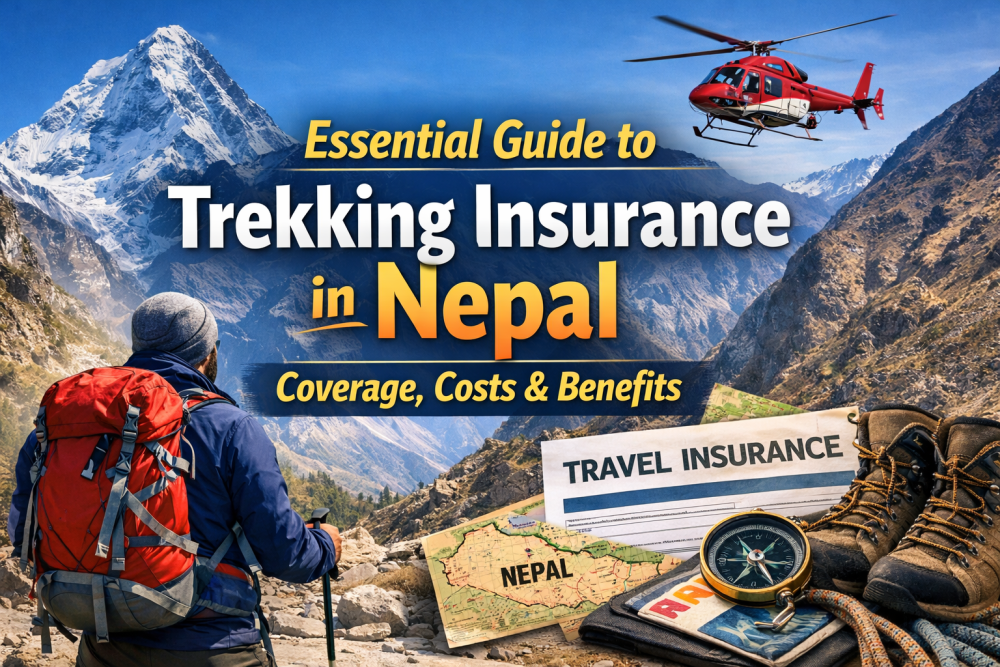
Essential Guide to Trekking Insurance in Nepal: Coverage, Costs & Benefits
Trekking in Nepal is an adventure of a lifetime. From the famous Everest Base Camp to the stunning Annapurna Circuit and the remote Manaslu and Dolpo trails, Nepal offers some of the most rewarding trekking experiences in the world. However, due to the high altitude, unpredictable weather and limited medical facilities in remote areas, Nepal tour insurance is optional but essential.
Every year, hikers face unexpected situations such as altitude sickness, injuries, flight cancellations or emergency helicopter evacuation. Without proper insurance, these accidents can cost thousands of dollars and quickly turn a dream trip into a financial nightmare. This essential guide to trekking insurance in Nepal explains what trekking insurance covers, how much it costs and why it's important to help you choose the right policy before you hit the Himalayas.
What Is Trekking Insurance in Nepal?
Nepal trekking insurance is a specialized form of travel insurance designed to cover the unique risks associated with trekking, hiking and adventure travel in mountainous regions.
Unlike normal travel , travel insurance includes:
-
High-altitude coverage
-
Emergency helicopter evacuation
-
Medical treatment in remote areas
-
Adventure activity protection
Most trekking routes in Nepal reach altitudes of 4,000-5,500 meters above sea level, where standard travel insurances often become invalid. For this reason, a bunch of tours require special trekking insurance that is strongly recommended by tour agencies, guides and rescue authorities.
Why Trekking Insurance Is Mandatory in Nepal
Nepal’s trekking regions are remote, rugged, and medically underdeveloped. In many areas, helicopter evacuation is the only emergency rescue option.
Here’s why trekking insurance is essential:
-
🚁 Helicopter evacuation costs can range from USD 3,000 to USD 10,000+
-
🏥 Medical treatment at altitude is expensive and limited
-
⛰️ Altitude sickness can affect anyone—regardless of fitness
-
❄️ Weather disruptions frequently cancel domestic flights
-
🛂 Trekking permits and agencies often require insurance proof
Without insurance, trekkers are required to pay rescue and treatment costs upfront, which can be extremely difficult in emergency situations.
What Does Trekking Insurance in Nepal Cover?
A trekking insurance should provide comprehensive protection from the moment you arrive in Nepal until you return home.
1. Emergency Medical Coverage
Medical coverage is the foundation of any trekking insurance plan. This includes:
-
Treatment for injuries, fractures, infections, or illness
-
Hospitalization and doctor visits
-
Medication and medical supplies
Look for a policy that covers at least USD 100,000 in medical expenses.
2. High-Altitude Coverage (Critical)
Many standard travel insurance plans exclude trekking above 3,000 meters. In Nepal, most popular treks exceed this limit.
Your policy must explicitly cover:
-
Trekking up to 5,000–6,000 meters
-
Altitude sickness (AMS, HAPE, HACE)
-
Emergency descent and treatment
Always check the maximum altitude limit mentioned in the policy.
3. Emergency Helicopter Evacuation & Rescue
This is the most important benefit of trekking insurance in Nepal.
Helicopter evacuation covers:
-
Air rescue from remote trekking routes
-
Transport to the nearest hospital
-
Coordination with rescue authorities
Without insurance, helicopter companies will not operate unless payment is guaranteed.
4. Trip Cancellation & Interruption
Nepal travel plans are often disrupted by:
-
Weather conditions
-
Health emergencies
-
Flight delays or cancellations
Trip interruption coverage helps recover costs for:
-
Unused accommodation
-
Missed flights
-
Rescheduled travel plans
5. Domestic Flight Delays & Cancellations
Popular trekking gateways like Lukla, Jomsom, and Simikot are notorious for flight delays due to weather.
Insurance can cover:
-
Additional accommodation
-
Meals and rebooking costs
-
Alternative transport arrangements
6. Personal Accident & Disability Coverage
In case of serious injury or permanent disability, trekking insurance provides:
-
Lump-sum compensation
-
Financial support for recovery or dependents
7. Baggage & Equipment Protection
Trekking equipment is expensive. Coverage may include:
-
Lost or delayed baggage
-
Damaged trekking gear
-
Theft during travel
Note: All the coverages may not be included in a package. Coverage may vary according to policy by the insurance manager.
What Is NOT Covered by Trekking Insurance?
Understanding exceptions is just as important.
Most policies don't cover:
-
Travel outside the specified height limits
-
Extreme climbing without extras
-
Pre-existing medical conditions (unless declared)
-
Accidents involving alcohol or drugs
-
Reckless behavior or violation of rules
Always read policy exclusions carefully.
How Much Does Trekking Insurance Cost in Nepal?
The cost of trekking insurance depends on several factors:
Key Cost Factors:
-
Duration of stay
-
Maximum altitude covered
-
Age of the traveler
-
Coverage limits
-
Adventure activity add-ons
Average Cost Estimate:
-
USD 5–10 per day for comprehensive coverage
-
Everest Base Camp treks typically cost USD 80–150 for insurance
-
Higher altitude or longer treks cost more
Considering the potential rescue and medical expenses, trekking insurance is one of the smartest investments you’ll make for your trip.
How to Choose the Best Trekking Insurance for Nepal
When choosing a policy, make , make sure it meets the following criteria:
✔ Applies to trek above 5,000 meters
Indispensable for trekking Everest, Annapurna, Manaslu and Langtang.
✔ Includes helicopter evacuation
It should clearly state "emergency evacuation by helicopter".
✔ Valid in Nepal
Some policies exclude Nepal and Himalayan regions.
✔ No discount or low surplus
High deductibles can delay emergency response.
✔ 24-hour emergency service
Critical in coordinating rescue operations in remote areas.
Do You Need Trekking Insurance for Everest Base Camp?
Yes, absolutely.
Everest Base Camp trekking insurance must cover:
-
Altitude up to 5,364 meters
-
Emergency helicopter evacuation
-
High-altitude illness treatment
Most trekking agencies will not allow you to trek without valid insurance.
When Should You Buy Trekking Insurance?
It’s best to purchase trekking insurance:
-
Before arriving in Nepal
-
Immediately after booking your trek
-
Before applying for trekking permits (if required)
Early purchase ensures coverage for trip cancellation and pre-departure issues.
Common Mistakes Trekkers Make
Avoid these costly errors:
-
Assuming regular travel insurance is enough
-
Ignoring altitude limits
-
Not declaring medical conditions
-
Choosing the cheapest policy without checking coverage
-
Forgetting evacuation coverage
Final Thoughts: Is Trekking Insurance Worth It?
Absolutely.
Trekking insurance in Nepal is not just a formality it’s your safety net in the Himalayas. From emergency evacuations to medical care and trip disruptions, the right insurance protects your health, finances, and peace of mind.
For a small cost, you gain:
-
Financial security
-
Emergency support
-
Stress-free trekking experience
Before you start your Himalayan journey, make sure you’re fully insured, properly covered, and adventure-ready.
Ready to Trek Nepal Safely?
Choose a trekking insurance plan that covers high altitude, emergency evacuation, and medical care—and focus on what truly matters: enjoying the beauty of Nepal’s mountains.